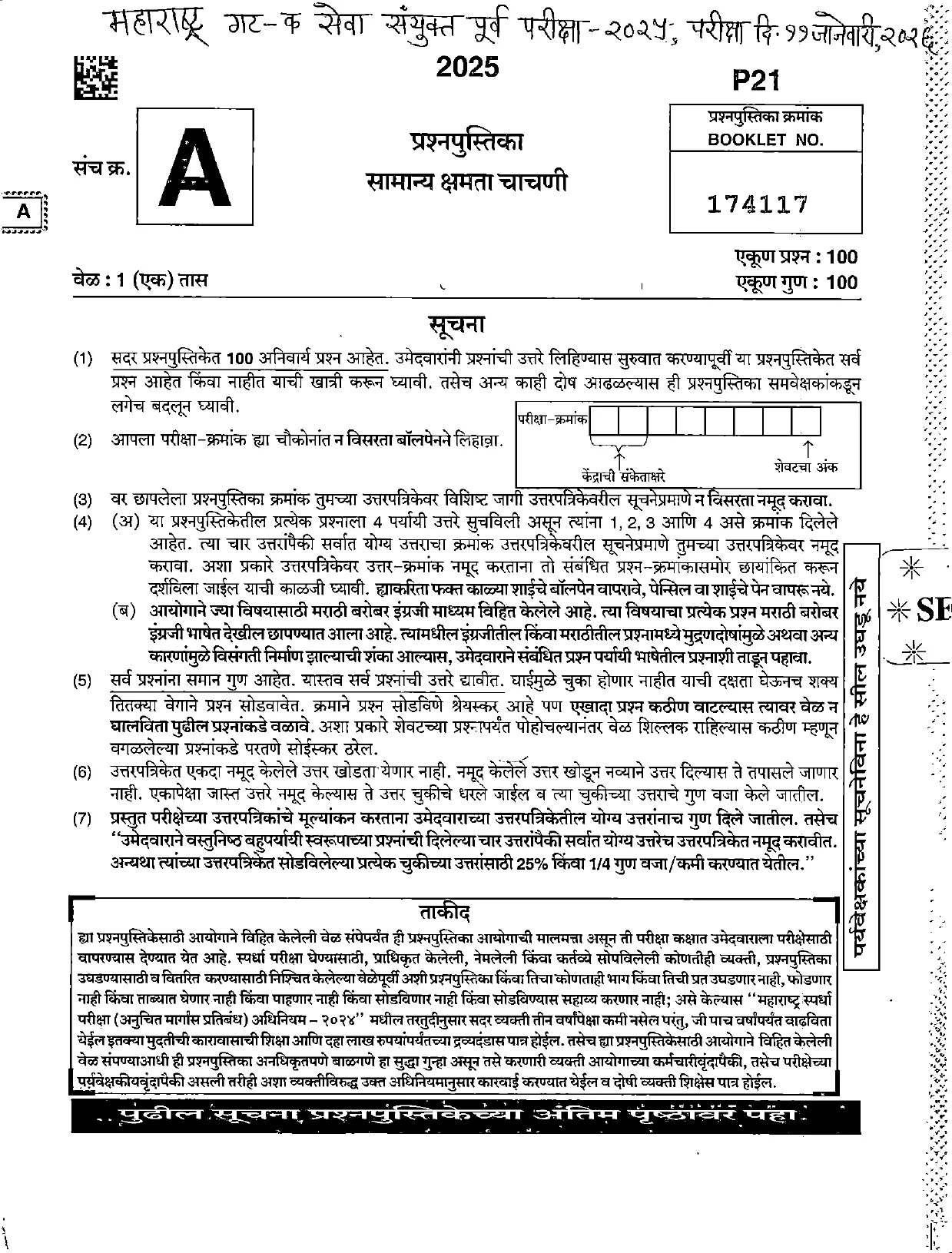
Below is the raw extracted text layer indexed from the official PDF for search accessibility, screen readers, and quick question search.
Maharashtra Public Service Commission Assessment
Duration :
Number of Questions :
Total Marks :
Display Marks:
Associate Prof Food Tech and Assistant Prof Food Tech and
Management Group A Common Screening Test
60
100
200
Yes
Maximum Instruction Time :
Is Section Default? :
0
No
Subject Name :
Question Number : 1 Question Id : 4410092124464 Question Type : MCQ
What type of structure is formed when amylose interacts with lipids in food systems?
Options :
1. Colloidal dispersion
2. Micelle
3. Inclusion complex
4. Covalent bond
Question Number : 2 Question Id : 4410092124465 Question Type : MCQ
Which of the following best describes a protein-protein interaction in food systems?
Options :
1. Hydrolysis of proteins into smaller peptides
2. Formation of peptide bonds during protein synthesis
3. Physical association between protein molecules
4. Denaturation of a single protein molecule
�Question Number : 3 Question Id : 4410092124471 Question Type : MCQ
When iron cookware is used to prepare acidic foods, what is a likely nutritional consequence for the food?
Options :
1. Decreased iron content in the cooked food
2. Higher vitamin C levels in the cooked food
3. Greater calcium availability in the cooked food
4. Increased dietary iron content in the cooked food
Question Number : 4 Question Id : 4410092124483 Question Type : MCQ
During caramelization, which compound is most likely to be formed and contribute to the characteristic aroma?
Options :
1. Polyphenols
2. Acrylamide
3. Furan derivatives
4. Hydrogen peroxide
Question Number : 5 Question Id : 4410092124485 Question Type : MCQ
How does enzymatic browning typically influence the nutritive value of fruits and vegetables?
Options :
1. It enhances the protein structure in the food.
2. It improves the stability of fats.
3. It significantly increases carbohydrate content.
4. It leads to the loss of certain vitamins.
�Question Number : 6 Question Id : 4410092124473 Question Type : MCQ
A food technologist wants to reduce acrylamide formation in a potato-based snack product. Which strategy is most effective based on current food
chemistry understanding?
Options :
1. Adding sodium benzoate before frying
2. Prolonging the frying time at a constant temperature
3. Increasing frying temperature to reduce cooking time
4. Blanching of potatoes before frying
Question Number : 7 Question Id : 4410092124475 Question Type : MCQ
Which food processing technique is most likely to contribute to the formation of nitrosamines in cured meats?
Options :
1. Refrigeration after adding antioxidants
2. Vacuum packaging immediately after grinding
3. Smoking in a closed chamber without additives
4. High-temperature frying after curing with nitrite salts
Question Number : 8 Question Id : 4410092124476 Question Type : MCQ
Which property of polychlorinated aromatic hydrocarbons (PCAHs) most significantly influences their persistence in the environment and
potential for bioaccumulation in the food chain?
Options :
1. High lipophilicity
2. Low solubility in water
3. High volatility
4. Rapid biodegradability
�Question Number : 9 Question Id : 4410092124482 Question Type : MCQ
Which of the following food commodities is at highest risk for zearalenone contamination?
Options :
1. Dairy products processed under sterile conditions
2. Cereal grains stored under humid conditions
3. Fresh fruits stored at refrigeration temperatures
4. Leafy green vegetables harvested in dry climates
Question Number : 10 Question Id : 4410092124487 Question Type : MCQ
When scaling up the extraction of betalains from beetroot for industrial food coloring, which operational consideration is most critical to prevent
loss of pigment quality and yield?
Options :
1. Maintaining low extraction temperatures and rapid processing
2. Applying mechanical pressing at elevated temperatures
3. Using highly alkaline extraction media for extended periods
4. Increasing solvent volume and extraction duration
Question Number : 11 Question Id : 4410092124490 Question Type : MCQ
Which of these is typically produced in the Molisch test when carbohydrates are present?
Options :
1. Red-orange color
2. Blue precipitate
3. Violet ring
4. Green solution
�Question Number : 12 Question Id : 4410092124503 Question Type : MCQ
Which coenzyme is directly derived from riboflavin and plays a central role in oxidative metabolism?
Options :
1. Nicotinamide adenine dinucleotide (NAD)
2. Pyridoxal phosphate (PLP)
3. Flavin adenine dinucleotide (FAD)
4. Flavin mononucleotide (FMN)
Question Number : 13 Question Id : 4410092124504 Question Type : MCQ
Which statement best describes the primary biochemical role of ascorbic acid in human metabolism?
Options :
1. It acts as a reducing agent involved in collagen synthesis
2. It directly generates ATP in mitochondria
3. It is the primary molecule for fatty acid oxidation
4. It catalyzes the translation of proteins
Question Number : 14 Question Id : 4410092124491 Question Type : MCQ
During prolonged fasting, which pathway is primarily responsible for maintaining blood glucose levels?
Options :
1. Glycogenolysis
2. Glycolysis
3. Gluconeogenesis
4. Pentose phosphate pathway
�Question Number : 15 Question Id : 4410092124494 Question Type : MCQ
Which of the following best describes the net ATP yield from the complete beta oxidation and subsequent metabolic processing of one palmitoylCoA molecule?
Options :
1. 106 ATP
2. 90 ATP
3. 76 ATP
4. 129 ATP
Question Number : 16 Question Id : 4410092124505 Question Type : MCQ
In the context of Vitamin K's role as a coenzyme, which enzymatic process is directly dependent on its presence in the human body?
Options :
1. Gamma-carboxylation of glutamate residues in clotting factors.
2. Decarboxylation of lysine in amino acid metabolism.
3. Hydroxylation of proline in collagen synthesis.
4. Phosphorylation of serine in metabolic enzymes.
Question Number : 17 Question Id : 4410092124506 Question Type : MCQ
Which of the following is considered an intrinsic factor affecting food spoilage?
Options :
1. Packaging atmosphere
2. Relative humidity
3. pH of the food
4. Storage temperature
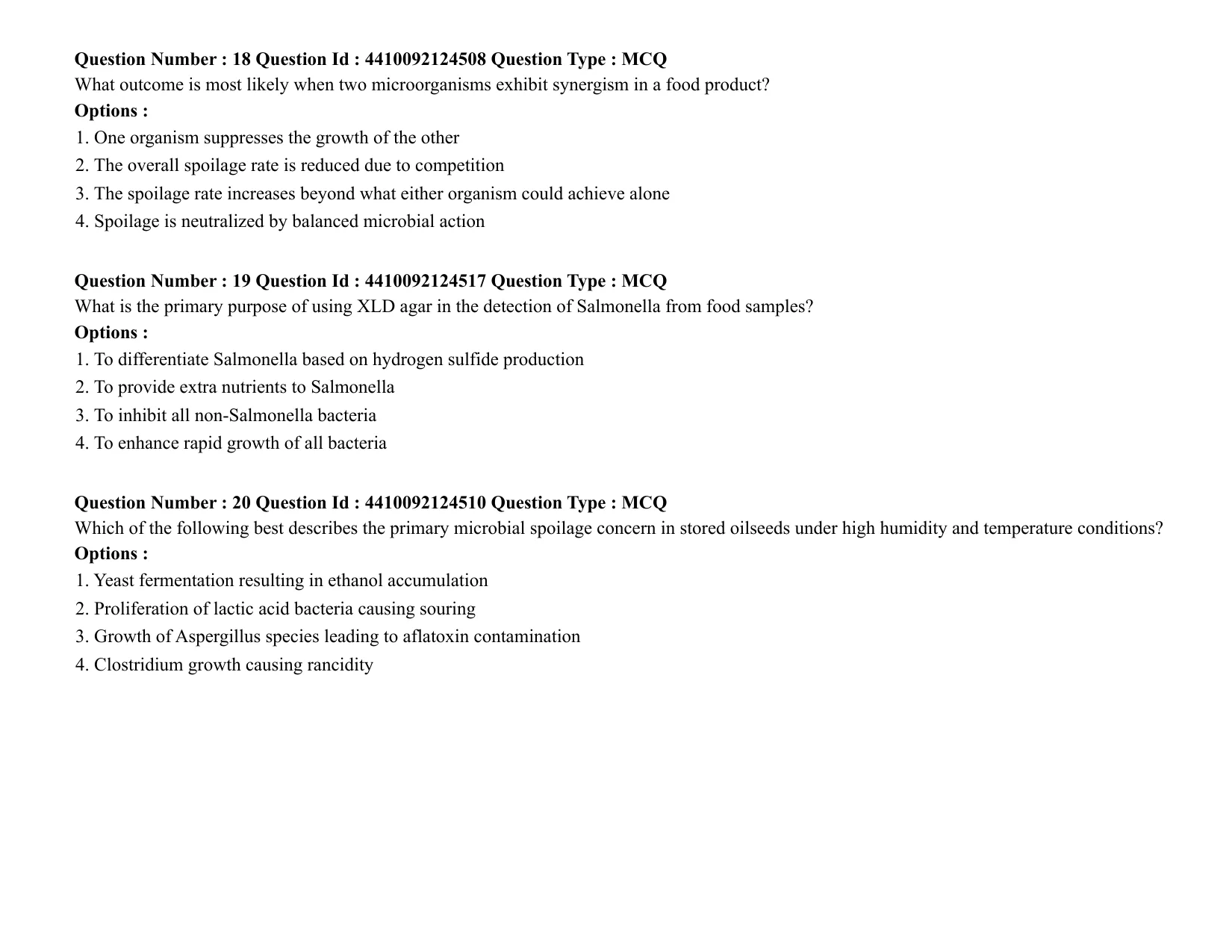
�Question Number : 18 Question Id : 4410092124508 Question Type : MCQ
What outcome is most likely when two microorganisms exhibit synergism in a food product?
Options :
1. One organism suppresses the growth of the other
2. The overall spoilage rate is reduced due to competition
3. The spoilage rate increases beyond what either organism could achieve alone
4. Spoilage is neutralized by balanced microbial action
Question Number : 19 Question Id : 4410092124517 Question Type : MCQ
What is the primary purpose of using XLD agar in the detection of Salmonella from food samples?
Options :
1. To differentiate Salmonella based on hydrogen sulfide production
2. To provide extra nutrients to Salmonella
3. To inhibit all non-Salmonella bacteria
4. To enhance rapid growth of all bacteria
Question Number : 20 Question Id : 4410092124510 Question Type : MCQ
Which of the following best describes the primary microbial spoilage concern in stored oilseeds under high humidity and temperature conditions?
Options :
1. Yeast fermentation resulting in ethanol accumulation
2. Proliferation of lactic acid bacteria causing souring
3. Growth of Aspergillus species leading to aflatoxin contamination
4. Clostridium growth causing rancidity
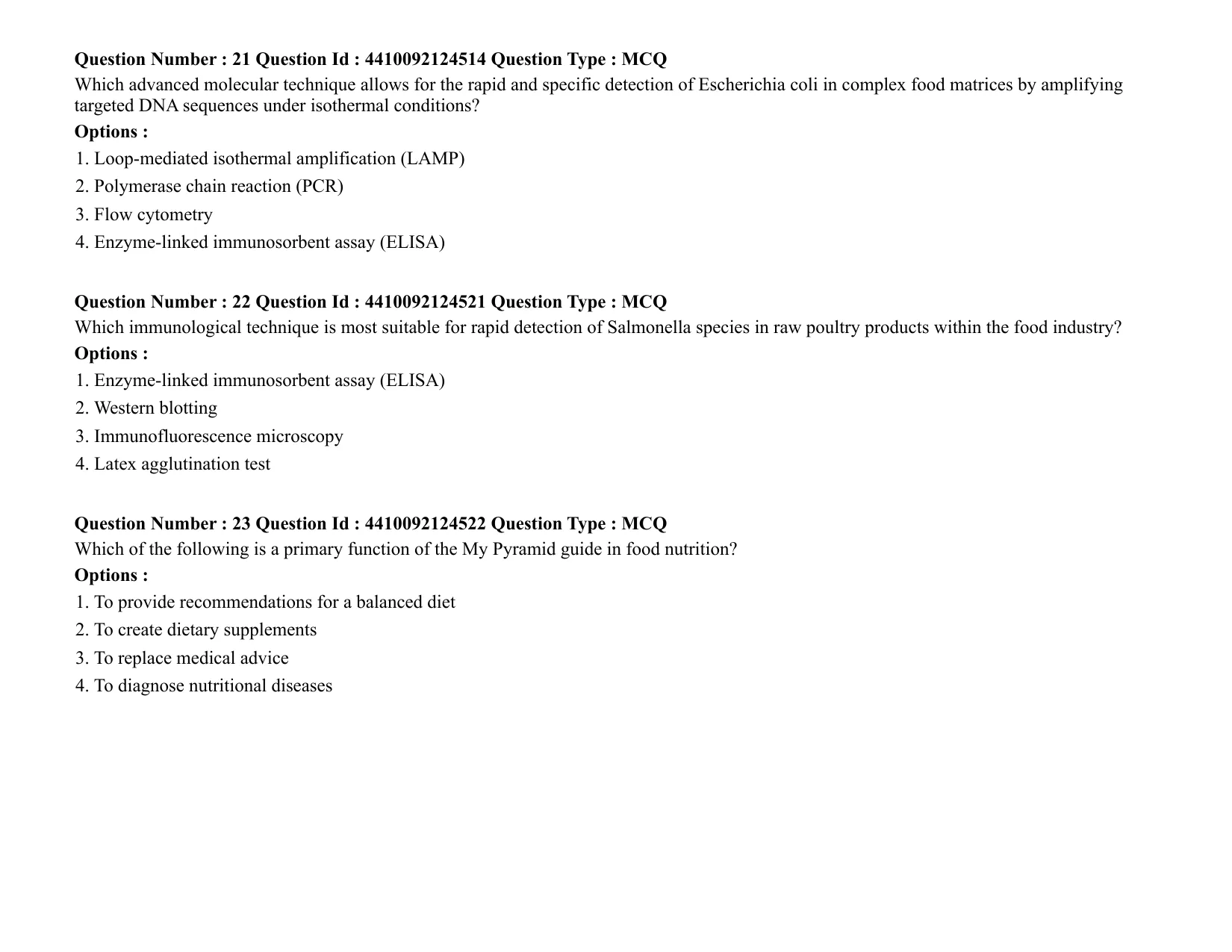
�Question Number : 21 Question Id : 4410092124514 Question Type : MCQ
Which advanced molecular technique allows for the rapid and specific detection of Escherichia coli in complex food matrices by amplifying
targeted DNA sequences under isothermal conditions?
Options :
1. Loop-mediated isothermal amplification (LAMP)
2. Polymerase chain reaction (PCR)
3. Flow cytometry
4. Enzyme-linked immunosorbent assay (ELISA)
Question Number : 22 Question Id : 4410092124521 Question Type : MCQ
Which immunological technique is most suitable for rapid detection of Salmonella species in raw poultry products within the food industry?
Options :
1. Enzyme-linked immunosorbent assay (ELISA)
2. Western blotting
3. Immunofluorescence microscopy
4. Latex agglutination test
Question Number : 23 Question Id : 4410092124522 Question Type : MCQ
Which of the following is a primary function of the My Pyramid guide in food nutrition?
Options :
1. To provide recommendations for a balanced diet
2. To create dietary supplements
3. To replace medical advice
4. To diagnose nutritional diseases
�Question Number : 24 Question Id : 4410092124525 Question Type : MCQ
Which macronutrient typically contributes the most to diet induced thermogenesis (DIT) in terms of percent energy expenditure?
Options :
1. Carbohydrate
2. Fiber
3. Fat
4. Protein
Question Number : 25 Question Id : 4410092124529 Question Type : MCQ
How does glycemic load (GL) differ from glycemic index (GI) when assessing carbohydrate foods?
Options :
1. GL measures vitamin absorption, while GI measures carbohydrate digestion.
2. GL only measures the total carbohydrate content, not the speed of glucose rise.
3. GI and GL are identical terms used interchangeably.
4. GL tells the total impact on blood sugar, while GI tells the speed of the spike.
Question Number : 26 Question Id : 4410092124538 Question Type : MCQ
In enzymatic assays for assessing protein quality, which factor most significantly affects the accuracy of results?
Options :
1. Color intensity of the reaction product
2. Choice of enzyme specificity for target protein bonds
3. Amount of carbohydrate present in the sample
4. Storage duration of the protein sample
Question Number : 27 Question Id : 4410092124530 Question Type : MCQ
After absorption in the enterocyte, long-chain fatty acids are primarily processed into which form for transport?
Options :
1. They are released as free fatty acids into the portal vein
2. They are immediately oxidized for energy in enterocytes
3. They are re-esterified into triglycerides and packaged into chylomicrons
4. They are converted into micelles for blood transport
�Question Number : 28 Question Id : 4410092124531 Question Type : MCQ
A manufacturer wishes to reformulate a baked product to improve its nutritional profile. Which substitution would most likely result in a product
with reduced cardiovascular risk?
Options :
1. Maintaining the original hydrogenated fat source
2. Replacing hydrogenated vegetable oil with medium chain triglyceride-rich coconut oil
3. Using butter instead of hydrogenated vegetable oil
4. Substituting non-hydrogenated canola oil
Question Number : 29 Question Id : 4410092124537 Question Type : MCQ
What is the effect of protein deficiency?
Options :
1. Stresses kidneys leading to dehydration, bad breath and digestive issues
2. Available protein is stored as fat
3. Breaks down muscle tissue to preserve vital functions
4. Causes unintended weight gain
Question Number : 30 Question Id : 4410092124542 Question Type : MCQ
Which combination of micronutrients in flour fortification presents the highest risk of negative nutrient interaction, potentially reducing the
efficacy of fortification efforts?
Options :
1. Folic acid and vitamin B12 co-fortification
2. Vitamin A and vitamin D added simultaneously
3. Iron and zinc salts added together in high concentrations
4. Calcium and magnesium added together at moderate levels
�Question Number : 31 Question Id : 4410092124369 Question Type : MCQ
Which phase of the drying curve is characterized by a constant rate of moisture removal from food material?
Options :
1. Equilibrium period
2. Preheating period
3. Constant rate period
4. Falling rate period
Question Number : 32 Question Id : 4410092124382 Question Type : MCQ
Which process involves lowering the temperature of food just above its freezing point to slow down microbial and enzymatic activity?
Options :
1. Freezing
2. Chilling
3. Irradiation
4. Pasteurization
Question Number : 33 Question Id : 4410092124371 Question Type : MCQ
In the context of drying and dehydration process, what does the slope of the constant wet-bulb temperature line on a psychrometric chart indicate?
Options :
1. The moisture content at equilibrium
2. The air velocity during drying
3. The dew point temperature for the air
4. The direction of constant enthalpy
Question Number : 34 Question Id : 4410092124373 Question Type : MCQ
Which statement best describes the main advantage of osmotic dehydration when used for preserving fruits?
Options :
1. It reduces water activity while retaining most of the fruit’s flavor and nutrients.
2. It extends shelf life by increasing the water content of fruits.
3. It causes significant nutrient leaching during processing.
4. It increases enzymatic browning of fruit tissues during treatment.
�Question Number : 35 Question Id : 4410092124387 Question Type : MCQ
If a cold storage facility frequently loads large quantities of unfrozen produce, what is the most significant effect on the refrigeration system?
Options :
1. Improved humidity control inside the storage
2. Faster attainment of target storage temperature
3. Increased refrigeration load due to higher heat removal demand
4. Reduced overall power consumption by the system
Question Number : 36 Question Id : 4410092124370 Question Type : MCQ
A food technologist is tasked with optimizing the drying process for apple slices. Given that the drying curve exhibits a distinct constant rate
period followed by a falling rate period, which adjustment would most effectively decrease total drying time without risking case hardening?
Options :
1. Significantly raising air temperature in the falling rate period
2. Increasing air velocity only after the falling rate period begins
3. Lowering air humidity drastically during the entire process
4. Increasing air velocity moderately during the constant rate period
Question Number : 37 Question Id : 4410092124372 Question Type : MCQ
Which statement correctly describes an advantage of combined dryers over single-mechanism dryers?
Options :
1. They operate only at very low temperatures
2. They reduce drying time and improve product uniformity
3. They eliminate the need for any airflow
4. They are suitable only for liquid foods
�Question Number : 38 Question Id : 4410092124374 Question Type : MCQ
A food technologist must design a thermal process to ensure both the safety and quality of low-acid canned food product. Which combination of
process parameters best achieves commercial sterility while minimizing nutrient loss?
Options :
1. Applying variable temperature cycles
2. Applying low temperature for a long time
3. Applying high temperature for a short time
4. Using moderate temperature for a moderate time
Question Number : 39 Question Id : 4410092124383 Question Type : MCQ
A food technologist is designing a freezing process for a high-moisture fruit puree. To optimize the microbial stability and texture preservation,
which strategy best utilizes the relationship between the freezing curve and water activity during storage at low temperature?
Options :
1. Maintaining temperature just above the eutectic point to preserve food structure
2. Rapid freezing to quickly lower water activity and minimize ice crystal growth
3. Freezing only to the initial freezing point to control microbial activity
4. Slow freezing to allow gradual reduction in water activity
Question Number : 40 Question Id : 4410092124389 Question Type : MCQ
A food technologist is tasked with preserving the texture and the nutritional quality of delicate berries for export using advanced freezing
methods. Which approach would be most suitable, considering both cryogenic freezing and Individual Quick Freezing (IQF) principles?
Options :
1. Utilizing IQF with air chilling to separate berries during gradual freezing
2. Freezing berries in bulk with liquid carbon dioxide for overall rapid temperature drop
3. Using cryogenic freezing with liquid nitrogen in combination with IQF to rapidly freeze individual berries
4. Applying air-blast freezing with IQF for slow and uniform freezing of berry clusters
�Question Number : 41 Question Id : 4410092124393 Question Type : MCQ
Which specific type of sampling uses a binary outcome (e.g., conforming or nonconforming) based on whether a population possesses a certain
characteristic?
Options :
1. Attribute sampling
2. Variable sampling
3. Stratified sampling
4. Continuous sampling
Question Number : 42 Question Id : 4410092124395 Question Type : MCQ
Which statement best describes a key reason for homogenizing a food sample before analysis in food sampling procedures?
Options :
1. It ensures consistent distribution of analytes throughout the sample.
2. It removes potential external contaminants from the sample.
3. It significantly reduces microbial activity in the sample.
4. It enhances the efficiency of solvent extraction processes.
Question Number : 43 Question Id : 4410092124398 Question Type : MCQ
Which of the following best describes titratable acidity in the context of food analysis?
Options :
1. It indicates the amount of acid absorbed from food by the body.
2. It measures the total acid concentration present in a food sample using a standard base.
3. It measures only the free hydrogen ion concentration in the food sample.
4. It represents the amount of acid needed to neutralize the food sample.
�Question Number : 44 Question Id : 4410092124396 Question Type : MCQ
A food technologist is tasked with reducing errors in iron determination using atomic absorption spectrometer. Which modification to sample
preparation will most effectively improve both accuracy and precision?
Options :
1. Filtering all sample solutions to remove particulates before analysis
2. Using a single digestion method for all types of food matrices
3. Reducing the sample mass to decrease reagent consumption
4. Ensuring thorough homogenization of the food matrix before sub-sampling
Question Number : 45 Question Id : 4410092124402 Question Type : MCQ
A food scientist is tasked with detecting adulteration in ghee using infrared spectroscopy. Which strategy best enables identification of adulterants
based on the IR spectrum?
Options :
1. Comparing the overall spectrum shapes for visual similarities
2. Focusing on the intensity changes at random wavenumbers
3. Measuring the baseline shift in the IR spectrum only
4. Analyzing the unique absorption bands corresponding to functional groups of adulterants
Question Number : 46 Question Id : 4410092124403 Question Type : MCQ
How can nuclear magnetic resonance (NMR) spectroscopy be most effectively used to distinguish between cis and trans fatty acids in edible oils?
Options :
1. By analyzing the chemical shift and coupling patterns of hydrogen atoms near double bonds
2. By determining the refractive index changes detected by NMR
3. By measuring the overall molecular weight of the fatty acids using NMR
4. By quantifying the elemental composition of the oil using NMR
�Question Number : 47 Question Id : 4410092124415 Question Type : MCQ
Which microorganism is most commonly monitored as an indicator of fecal contamination in food quality testing?
Options :
1. Lactobacillus casei
2. Salmonella enterica
3. Escherichia coli
4. Listeria monocytogenes
Question Number : 48 Question Id : 4410092124416 Question Type : MCQ
In the duo-trio sensory test, how are the samples typically presented to the panelist?
Options :
1. Three identical samples are presented together
2. Two reference samples and one test sample are given
3. Only coded samples are given without a reference
4. One reference sample is given, then two coded samples for comparison
Question Number : 49 Question Id : 4410092124414 Question Type : MCQ
Match the specific stage of quality control with its primary decision-making objective:
1. Product control
2. Process control
3. Facilities control
X. Determines if the operation should be stopped or altered
Y. Determines if equipment needs maintenance or replacement
Z. Determines if the batch should be released or contained
Options :
1. 1-Z, 2-X, 3-Y
2. 1-X, 2-Z, 3-Y
3. 1-Y, 2-X, 3-Z
4. 1-Z, 2-Y, 3-X
�Question Number : 50 Question Id : 4410092124419 Question Type : MCQ
A multinational food company is planning to export fresh produce to multiple countries. Which approach most effectively ensures compliance
with the International Plant Protection Convention (IPPC) regarding food safety and international trade regulations?
Options :
1. Relying solely on domestic food safety standards for all shipments
2. Implementing harmonized phytosanitary measures and obtaining proper certification before export
3. Bypassing plant health inspections to reduce export costs
4. Focusing only on product labeling to meet consumer information requirements
Question Number : 51 Question Id : 4410092124427 Question Type : MCQ
A manufacturer wants to reduce the amount of salt in snack products without compromising its savory taste. Which additive should be
considered?
Options :
1. Vanillin
2. Monosodium glutamate
3. Aspartame
4. Tartrazine
Question Number : 52 Question Id : 4410092124422 Question Type : MCQ
Which of the following best describes a critical consideration when assessing the safety of food additives for human consumption?
Options :
1. Considering the technological function of the additive
2. Monitoring consumer complaints after product launch
3. Reviewing the production cost of the additive
4. Evaluation of toxicological data from animal and human studies
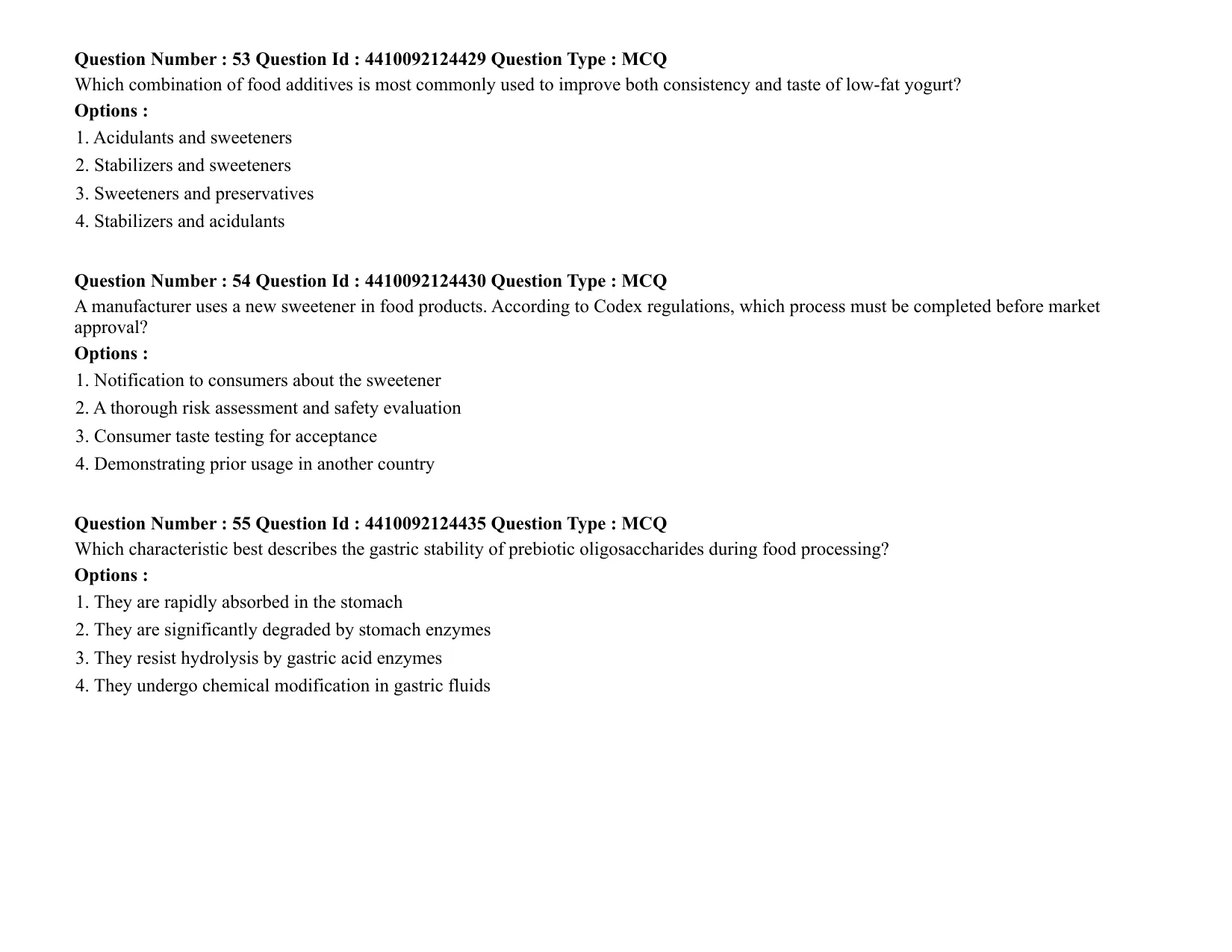
�Question Number : 53 Question Id : 4410092124429 Question Type : MCQ
Which combination of food additives is most commonly used to improve both consistency and taste of low-fat yogurt?
Options :
1. Acidulants and sweeteners
2. Stabilizers and sweeteners
3. Sweeteners and preservatives
4. Stabilizers and acidulants
Question Number : 54 Question Id : 4410092124430 Question Type : MCQ
A manufacturer uses a new sweetener in food products. According to Codex regulations, which process must be completed before market
approval?
Options :
1. Notification to consumers about the sweetener
2. A thorough risk assessment and safety evaluation
3. Consumer taste testing for acceptance
4. Demonstrating prior usage in another country
Question Number : 55 Question Id : 4410092124435 Question Type : MCQ
Which characteristic best describes the gastric stability of prebiotic oligosaccharides during food processing?
Options :
1. They are rapidly absorbed in the stomach
2. They are significantly degraded by stomach enzymes
3. They resist hydrolysis by gastric acid enzymes
4. They undergo chemical modification in gastric fluids
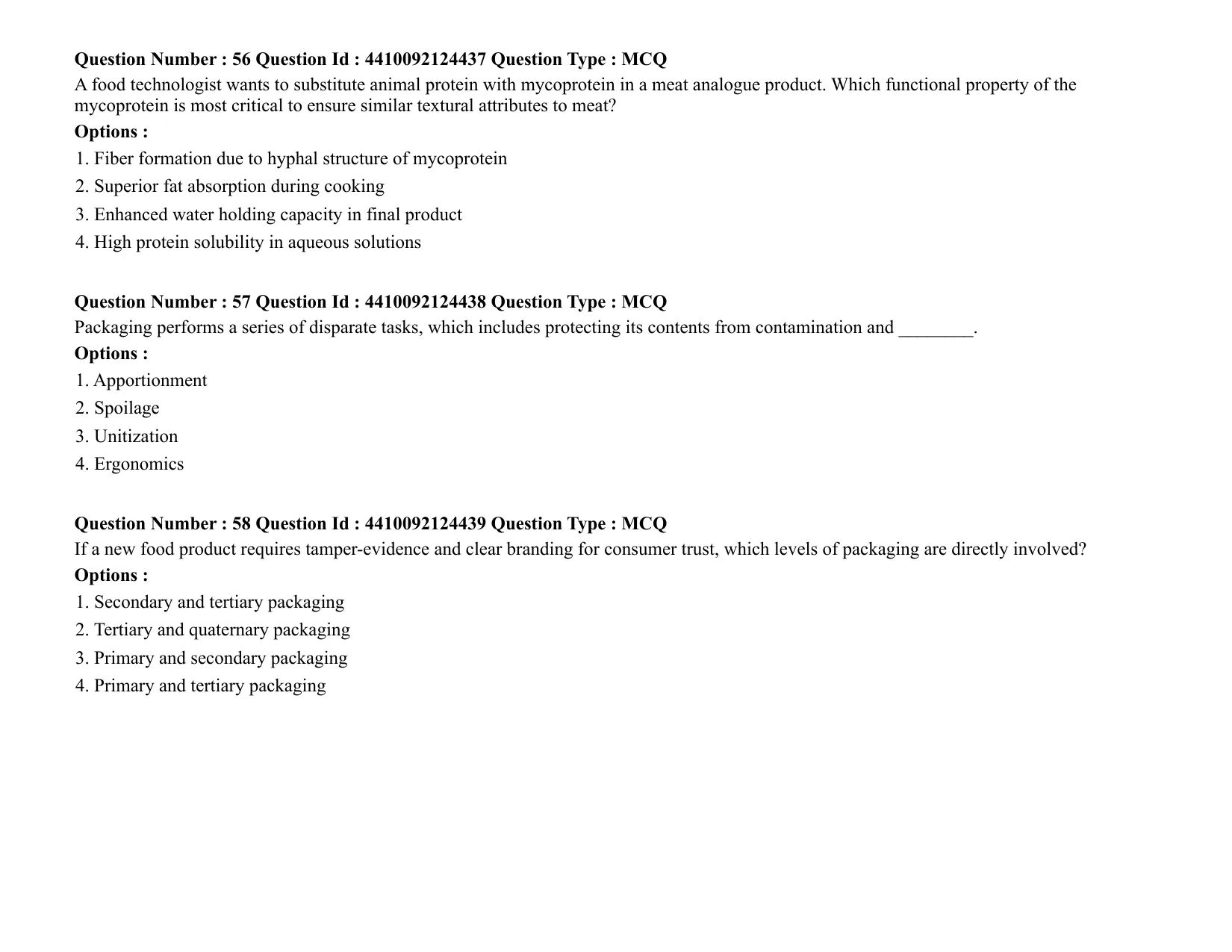
�Question Number : 56 Question Id : 4410092124437 Question Type : MCQ
A food technologist wants to substitute animal protein with mycoprotein in a meat analogue product. Which functional property of the
mycoprotein is most critical to ensure similar textural attributes to meat?
Options :
1. Fiber formation due to hyphal structure of mycoprotein
2. Superior fat absorption during cooking
3. Enhanced water holding capacity in final product
4. High protein solubility in aqueous solutions
Question Number : 57 Question Id : 4410092124438 Question Type : MCQ
Packaging performs a series of disparate tasks, which includes protecting its contents from contamination and ________.
Options :
1. Apportionment
2. Spoilage
3. Unitization
4. Ergonomics
Question Number : 58 Question Id : 4410092124439 Question Type : MCQ
If a new food product requires tamper-evidence and clear branding for consumer trust, which levels of packaging are directly involved?
Options :
1. Secondary and tertiary packaging
2. Tertiary and quaternary packaging
3. Primary and secondary packaging
4. Primary and tertiary packaging
�Question Number : 59 Question Id : 4410092124442 Question Type : MCQ
A food manufacturer is selecting packaging for a new line of ready-to-eat meals to be distributed nationally by road and rail. Which evaluation
method best predicts the packaging’s ability to withstand real-life transport hazards?
Options :
1. Simulated vibration and compression testing
2. Chemical migration analysis
3. Shelf life studies under controlled temperature
4. Visual inspection for surface defects
Question Number : 60 Question Id : 4410092124446 Question Type : MCQ
A food technologist is tasked with evaluating the regulatory aspects of irradiated packaging. Which statement is most accurate regarding
international regulatory acceptance?
Options :
1. There is a global ban on any form of food irradiation in packaging applications
2. No labeling is required for foods packaged using irradiation technology
3. All types of packaging materials are universally allowed for irradiation without restrictions
4. Irradiated foods and packaging must comply with specific dose limits and labeling requirements set by regulatory agencies
Question Number : 61 Question Id : 4410092124451 Question Type : MCQ
If a fruit is low in pectin, what is the most likely impact on products like jellies and jams made from it?
Options :
1. They may turn out too sweet for consumption
2. They may become overly acidic in taste
3. They may not set properly and remain runny
4. They may become excessively firm and tough
�Question Number : 62 Question Id : 4410092124457 Question Type : MCQ
Which microorganism is most commonly responsible for fermentation in traditional vegetable pickles?
Options :
1. Acetic acid bacteria
2. Lactic acid bacteria
3. Molds
4. Yeast
Question Number : 63 Question Id : 4410092124455 Question Type : MCQ
During cold-pressed cucumber juice production, which intervention most effectively extends shelf life without compromising nutritional value?
Options :
1. Increasing sodium benzoate concentration
2. High-pressure processing after extraction
3. Lowering extraction temperature
4. Thermal pasteurization before bottling
Question Number : 64 Question Id : 4410092124459 Question Type : MCQ
In the context of saccharine products, why is the detection of hydroxymethylfurfural (HMF) in honey considered significant?
Options :
1. HMF is a sign of proper floral sourcing
2. HMF confirms presence of natural antioxidants
3. HMF indicates excessive heating or adulteration
4. HMF signals optimal enzymatic activity
�Question Number : 65 Question Id : 4410092124233 Question Type : MCQ
A food technologist is tasked with verifying the purity of coffee powder that may be adulterated with chicory. Which analytical method is most
appropriate for detecting and quantifying chicory in roasted coffee blends in a quality control laboratory?
Options :
1. Sensory evaluation for bitterness and aroma
2. Caffeine content determination by UV spectrophotometry
3. HPLC analysis of specific marker compounds
4. Gravimetric analysis of total solids check and quality check
Question Number : 66 Question Id : 4410092124234 Question Type : MCQ
Which method is most likely to retain highest levels of the bioactive compounds associated with health benefits in coffee?
Options :
1. Wet processing with dark roasting
2. Dry processing with rapid mechanical drying
3. Dry processing with prolonged sun drying
4. Wet processing with minimal roasting
Question Number : 67 Question Id : 4410092124235 Question Type : MCQ
Which cereal is recognized as a good source of carbohydrates but relatively low in lysine content?
Options :
1. Rice
2. Oats
3. Maize
4. Wheat
�Question Number : 68 Question Id : 4410092124240 Question Type : MCQ
Which factor primarily influences the whiteness and degree of milling in rice during the production of milled rice products?
Options :
1. Moisture content of paddy before milling
2. Grain variety used for milling
3. Storage conditions after milling
4. Extent of bran layer removal during milling
Question Number : 69 Question Id : 4410092124237 Question Type : MCQ
Reducing break roll gap from 0.8 mm to 0.6 mm increases flour extraction from 68% to 72%, but what is the main drawback?
Options :
1. Reduced bran separation
2. Excessive starch damage
3. Increased processing time
4. Lower wheat throughput
Question Number : 70 Question Id : 4410092124239 Question Type : MCQ
Rubber roll husker removes paddy husk by applying:
Options :
1. Differential peripheral speed
2. Equal speed compression
3. Centrifugal impact force
4. Abrasive friction on single roll
�Question Number : 71 Question Id : 4410092124255 Question Type : MCQ
Which of the following traditional dairy products is made by fermenting milk with specific bacterial cultures?
Options :
1. Yoghurt
2. Khoa
3. Ghee
4. Paneer
Question Number : 72 Question Id : 4410092124256 Question Type : MCQ
Which step is most critical in the traditional preparation of Kalakand to achieve its characteristic grainy texture?
Options :
1. Adding ghee before the mixture thickens
2. Using only paneer without reducing milk
3. Careful reduction of milk with stirring
4. Adding sugar at the beginning of heating
Question Number : 73 Question Id : 4410092124253 Question Type : MCQ
Which combination of processing and packaging would best produce high-quality ghee with an extended shelf life and minimal rancidity?
Options :
1. Clarifying ghee at high temperature, packaging in transparent, open containers
2. Clarifying ghee at high temperature, packaging in opaque, airtight containers
3. Clarifying ghee at low temperature, packaging in opaque, airtight containers
4. Clarifying ghee at low temperature, packaging in open containers
Question Number : 74 Question Id : 4410092124254 Question Type : MCQ
Ion Exchange Chromatography in Whey Protein Isolate (WPI) production uses which resin for protein capture?
Options :
1. Cation exchange resin
2. Anion exchange resin
3. Gel filtration resin
4. Affinity chromatography resin
�Question Number : 75 Question Id : 4410092124258 Question Type : MCQ
Which chemical analysis method would determine the cause of unexpected crystallization and a gritty texture in sugar-based confectionery
despite proper cooking temperature control?
Options :
1. Refractometry to estimate total soluble solids
2. Polarimetry to measure optical rotation of the sample
3. Moisture analysis to determine water content
4. High-performance liquid chromatography to assess sugar composition
Question Number : 76 Question Id : 4410092124262 Question Type : MCQ
Minimum current required for effective electrical head-only stunning in cattle is:
Options :
1. 1.5 ampere
2. 0.5 ampere
3. 3.0 ampere
4. 0.1 ampere
Question Number : 77 Question Id : 4410092124268 Question Type : MCQ
What is the main effect of aging on meat?
Options :
1. Increases fat content substantially
2. Changes color to bright red
3. Reduces protein content
4. Improves tenderness of muscle fibers
�Question Number : 78 Question Id : 4410092124264 Question Type : MCQ
Which practice is most important for minimizing stress in poultry during handling for transport?
Options :
1. Fasting the birds for extended periods before transport
2. Overcrowding birds in transport crates
3. Providing high light intensity during handling
4. Using calm and gentle movements to guide birds
Question Number : 79 Question Id : 4410092124266 Question Type : MCQ
Ante-mortem inspection condemns animals showing which condition without postmortem examination?
Options :
1. Rabies
2. Mild lameness
3. Minor bruising
4. Slight fever
Question Number : 80 Question Id : 4410092124271 Question Type : MCQ
What storage strategy best minimizes albumen thinning and yolk index deterioration during extended egg storage, while preserving physical and
chemical quality?
Options :
1. Storing eggs at low temperature with high relative humidity
2. Storing eggs at low temperature in open air
3. Storing eggs at high temperature with low relative humidity
4. Oiling eggs and storing at room temperature
�Question Number : 81 Question Id : 4410092124280 Question Type : MCQ
Which attribute control chart is used when sample size varies across inspection lots in food packaging defect monitoring?
Options :
1. np-chart
2. c-chart
3. p-chart
4. u-chart
Question Number : 82 Question Id : 4410092124279 Question Type : MCQ
Pre-control chart (Rainbow chart) in food process quality uses which zone classification?
Options :
1. Red, Yellow, Green zones at ±1σ, ±2σ, ±3σ
2. Green (middle half of spec), Yellow (outer quarters), Red (outside spec)
3. Only green and red zones at ±3σ
4. Blue, Orange, Red zones based on Cpk values
Question Number : 83 Question Id : 4410092124281 Question Type : MCQ
Which variable control chart is preferred when subgroup size is n = 1 (individual measurements) in food processing?
Options :
1. X̄ -R chart
2. p-chart
3. X-MR chart
4. np-chart
Question Number : 84 Question Id : 4410092124283 Question Type : MCQ
Which statistical tool in Six Sigma identifies the vital few causes responsible for majority of food quality defects?
Options :
1. Control charts
2. Pareto analysis
3. Scatter diagram
4. Histogram
�Question Number : 85 Question Id : 4410092124285 Question Type : MCQ
Which of the following best describes agricultural supply chain in Food Supply Chain Management?
Options :
1. Only the transportation of food products
2. A single transaction between farmer and buyer
3. A series of processes that moves food from farms to consumers
4. Only the packaging and labeling of food items
Question Number : 86 Question Id : 4410092124287 Question Type : MCQ
Which of the following best illustrates a combined risk commonly faced in the food supply chain management due to both environmental and
economic factors?
Options :
1. Crop failure leading to price fluctuations in the market
2. Transportation delays due to road damage
3. Adverse weather affecting storage facilities
4. Changes in government policy impacting exports
Question Number : 87 Question Id : 4410092124292 Question Type : MCQ
What is the most effective first step to minimize food allergen contamination in a gluten-free pastry line, when the facility also uses wheat flour
daily?
Options :
1. Training staff in allergen management without changing production layout
2. Storing finished gluten-free products in airtight containers
3. Conducting allergen testing only after products are packaged
4. Establishing dedicated production zones for gluten-free and wheat-based products
�Question Number : 88 Question Id : 4410092124295 Question Type : MCQ
As per GHP, what is the recommended hand hygiene contact time with sanitizer for food handlers?
Options :
1. 0-5 seconds
2. 5-10 seconds
3. 20–30 seconds
4. 50-60 seconds
Question Number : 89 Question Id : 4410092124299 Question Type : MCQ
Which aspect is primarily evaluated during the safety assessment of nutraceuticals in clinical testing?
Options :
1. Nutrient content compared to daily values
2. Preferred flavor profiles by consumers
3. Stability of the product during storage
4. Potential adverse effects in human subjects
Question Number : 90 Question Id : 4410092124298 Question Type : MCQ
Which parameter defines the safety margin between therapeutic and toxic dose of a nutraceutical?
Options :
1. LD50
2. NOAEL
3. Therapeutic Index
4. MTD
Question Number : 91 Question Id : 4410092124297 Question Type : MCQ
Which adverse effect is specifically associated with chronic high-dose selenium supplementation?
Options :
1. Nephrotoxicity
2. Selenosis
3. Hepatotoxicity
4. Peripheral neuropathy
�Question Number : 92 Question Id : 4410092124300 Question Type : MCQ
A research team wants to develop a functional food product to help manage hypertension in middle-aged adults. Which combination of
nutraceutical ingredients is most evidence-based for inclusion, considering both efficacy in blood pressure reduction and safety for chronic use?
Options :
1. Phytosterols and caffeine extracts from tea leaves
2. Bioactive peptides from milk protein hydrolysates and potassium-rich plant extracts
3. Omega-3 fatty acids and high-sodium marine ingredients
4. Anthocyanins and saturated fat-rich seed oils
Question Number : 93 Question Id : 4410092124313 Question Type : MCQ
What is the advantage of cold extrusion over hot extrusion in food processing?
Options :
1. Higher starch gelatinization
2. Better microbial inactivation
3. Retention of heat-sensitive nutrients
4. Increased product expansion ratio
Question Number : 94 Question Id : 4410092124308 Question Type : MCQ
What is the z-value used for UHT process design for most heat-resistant bacterial spores?
Options :
1. 7°C
2. 10°C
3. 14°C
4. 20°C
�Question Number : 95 Question Id : 4410092124309 Question Type : MCQ
A food technologist is tasked with optimizing the retention of heat-sensitive nutrients during the pasteurization of fruit puree. Based on the
principles of microwave heating, which processing adjustment is most likely to improve both nutrient retention and microbial safety?
Options :
1. Lowering both microwave power and exposure time
2. Increasing exposure time with low microwave power
3. Reducing exposure time while increasing microwave power
4. Using intermittent microwave pulses at moderate power
Question Number : 96 Question Id : 4410092124318 Question Type : MCQ
A food processing company is considering using membrane technology for juice clarification. Which critical factor should they prioritize to
prevent rapid fouling and maintain process efficiency during large-scale continuous operation?
Options :
1. Selection of the smallest possible pore size
2. Increasing the temperature of the feed
3. Careful control of feed flow rate and pressure
4. Use of only high-quality membranes
Question Number : 97 Question Id : 4410092124319 Question Type : MCQ
Which parameter measures the amount of biodegradable organic matter in food industry wastewater?
Options :
1. pH
2. Biochemical Oxygen Demand
3. Chemical Oxygen Demand
4. Total Suspended Solids
�Question Number : 98 Question Id : 4410092124324 Question Type : MCQ
What is the primary limitation of using filamentous fungi (e.g., Aspergillus) for SCP production compared to yeast or bacteria?
Options :
1. Slower growth rate
2. Lower protein content
3. Difficulty in downstream processing
4. Inability to utilize carbohydrates
Question Number : 99 Question Id : 4410092124325 Question Type : MCQ
For organic waste, which option best combines renewable energy generation and environmental sustainability?
Options :
1. Direct incineration of waste
2. Landfilling organic waste
3. Anaerobic digestion
4. Solar Drying
Question Number : 100 Question Id : 4410092124326 Question Type : MCQ
Which integrated waste management approach best maximizes resource recovery, minimizes environmental impact, and meets regulatory
standards in food processing?
Options :
1. Landfill disposal with minimal pre-treatment
2. Anaerobic digestion and composting
3. Membrane filtration for all wastewater streams only
4. Incineration with energy recovery only
�